Car Insurance for a Newly Purchased Car: What to Do Before You Drive Off
How to insure a new or used car you just bought: grace periods for newly acquired vehicles, what lenders require, gap and new-car replacement coverage, and a checklist.

Updated November 12, 2026 · 5 min read
Key takeaways
- Call your insurer before you drive off, or as soon as possible. Many dealers ask for proof of insurance.
- Many policies give a short grace period for a newly acquired vehicle, but the length and coverage vary by policy and state.
- If you finance or lease, your lender will require collision and comprehensive, often with a maximum deductible.
- Consider gap insurance if you owe more than the car is worth.
Before you buy
- Get quotes for the specific make, model and trim. Insurance costs vary a lot between similar cars.
- Have the VIN ready, or get it from the dealer
- Know your lender's requirements: coverage types, maximum deductible and loss payee details
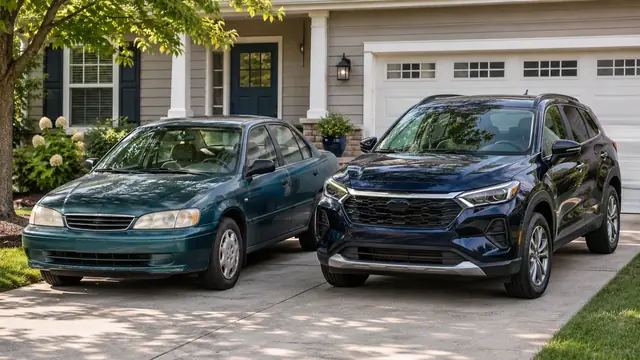
- Decide whether you'll replace a car on your policy or add another
Grace periods for new vehicles
Many personal auto policies automatically extend some coverage to a newly acquired vehicle for a short time, often between 7 and 30 days. But the details matter:
- Coverage may match the broadest coverage on your other cars, or only liability.
- Collision and comprehensive may not carry over if you don't have them on any current car.
- Some policies treat an additional car differently from a replacement car.
Don't rely on a grace period. Call your insurer and add the car before or on the day you take it home.
Free, no obligation, about two minutes. Or call: Insured 1-888-773-7558 · Uninsured 1-844-900-2302
What lenders require
If you finance or lease, expect to need collision and comprehensive, the lender listed as loss payee (or the leasing company as additional insured), and a deductible at or below a set maximum, often $500 or $1,000. Leases may also require higher liability limits.
Coverage to consider
- Gap insurance: pays the difference between what you owe and what the car is worth if it's totaled. Compare the dealer's price with your insurer's.
- New car replacement: offered by some insurers, it pays toward a new car of the same make and model if yours is totaled while new.
- Rental reimbursement so you're not without a car during repairs.
- Higher liability limits, especially if you have assets. See how much car insurance you need.
After you buy
- Get your new insurance ID card and keep it in the car and on your phone.
- Remove the old car from your policy after you sell or trade it in, and cancel or transfer its plates as your state requires.
- Register the car and send proof of insurance to the DMV if your state requires it.
Free, no obligation. Call Insured 1-888-773-7558 or Uninsured 1-844-900-2302 to compare auto insurance options by phone.
Frequently asked questions
Can I drive a new car home without insurance?
You shouldn't. Nearly every state requires liability insurance to drive (New Hampshire has its own financial responsibility rules instead), and dealers and lenders typically require proof of coverage.
Does my old car's insurance transfer to my new car?
If it's a replacement, your insurer can switch the coverage to the new car, but you need to tell them, and the price will change.
Is dealer gap insurance a good deal?
It's often more expensive than gap coverage from your auto insurer. Compare before signing.
Sources
How this guide was made: researched and drafted with AI assistance (Wren AI), checked against the sources listed above, and approved for publication by the Wren AI team. Wren AI is an AI research tool, not a licensed insurance agent.
This guide is general information, not insurance, legal, tax or medical advice. Coverage, rules and prices vary by state, insurer and policy. Confirm details with a licensed agent or the official source before you buy. Read our editorial policy.