How to Compare Pet Insurance Plans
A checklist for comparing pet insurance: coverage type, reimbursement rate, deductible, annual limit, waiting periods, pre-existing conditions and how premiums change as your pet ages.

Updated November 13, 2026 · 6 min read
Key takeaways
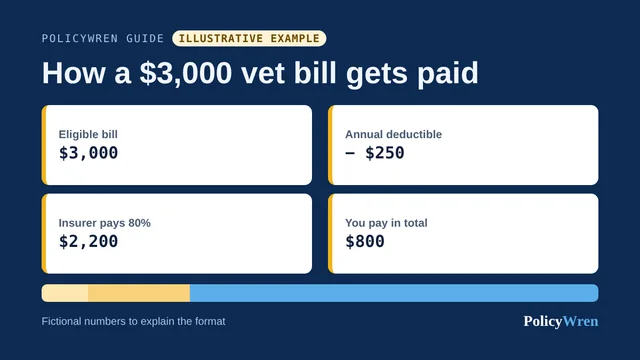
- Most pet insurance reimburses you after you pay the vet, rather than paying the vet directly.
- Compare reimbursement rate, deductible and annual limit together, because they work as a set.
- Pre-existing conditions are generally excluded, and waiting periods apply before some coverage starts.
- Premiums usually rise as pets age. Ask how pricing changes over time.

Free worksheet: print the pet plan comparison worksheet or download it as a spreadsheet.
Comparison checklist
- Coverage type: accident-only or accident-and-illness. See accident vs. illness plans.
- Reimbursement rate: often 70%, 80% or 90%
- Deductible: annual or per condition, and the amount
- Annual limit: a set dollar amount or unlimited
- Waiting periods: for accidents, illnesses and orthopedic conditions
- Pre-existing conditions: how they're defined and whether "curable" conditions can be covered later
- Exam fees, prescriptions, dental illness and behavioral care: included or not
- Wellness add-ons: routine care plans, which are separate from insurance
- Age limits and premium increases
Same price, different coverage
| Item | Plan A | Plan B |
|---|---|---|
| Monthly premium | $42 | $42 |
| Reimbursement | 90% | 80% |
| Deductible | $500 annual | $250 annual |
| Annual limit | $5,000 | Unlimited |
| Exam fees covered | No | Yes |
Fictional plans. For a big claim, Plan B's unlimited coverage matters more; for small claims, Plan A's higher reimbursement helps once the deductible is met.
Know your state's rules
A growing number of states have adopted the NAIC's pet insurance model law, which sets disclosure rules for waiting periods, pre-existing conditions and wellness programs. Check your state insurance department.
Frequently asked questions
Is pet insurance worth it?
It depends on your budget for an unexpected vet bill. Insurance spreads the cost of large, unexpected expenses.
Can I use any vet?
Most pet insurance plans let you use any licensed vet, since you're reimbursed after paying.
Does pet insurance cover routine care?
Usually only with a separate wellness add-on.
How this guide was made: researched and drafted with AI assistance (Wren AI), checked against the sources listed above, and approved for publication by the Wren AI team. Wren AI is an AI research tool, not a licensed insurance agent.
This guide is general information, not insurance, legal, tax or medical advice. Coverage, rules and prices vary by state, insurer and policy. Confirm details with a licensed agent or the official source before you buy. Read our editorial policy.