How to File a Home Insurance Claim: Step by Step
What to do after damage to your home: preventing further damage, documenting the loss, working with the adjuster, how deductibles and depreciation affect payment, and what to do if you disagree.

Updated November 12, 2026 · 7 min read
Key takeaways
- Make sure everyone is safe, then take reasonable steps to prevent more damage and keep receipts.
- Photograph and video everything before you clean up or throw anything away.
- With replacement cost coverage, insurers often pay actual cash value first and the rest after repairs are done.
- If you disagree with the amount, ask for the estimate line by line, and check your policy's appraisal clause.
Step by step
- Stay safe. Call 911 for emergencies and shut off water, gas or power if it's safe and needed.
- Prevent more damage. Tarp a roof, board windows or dry out water. Policies generally require reasonable steps to protect the property, and they usually reimburse reasonable costs. Keep receipts.
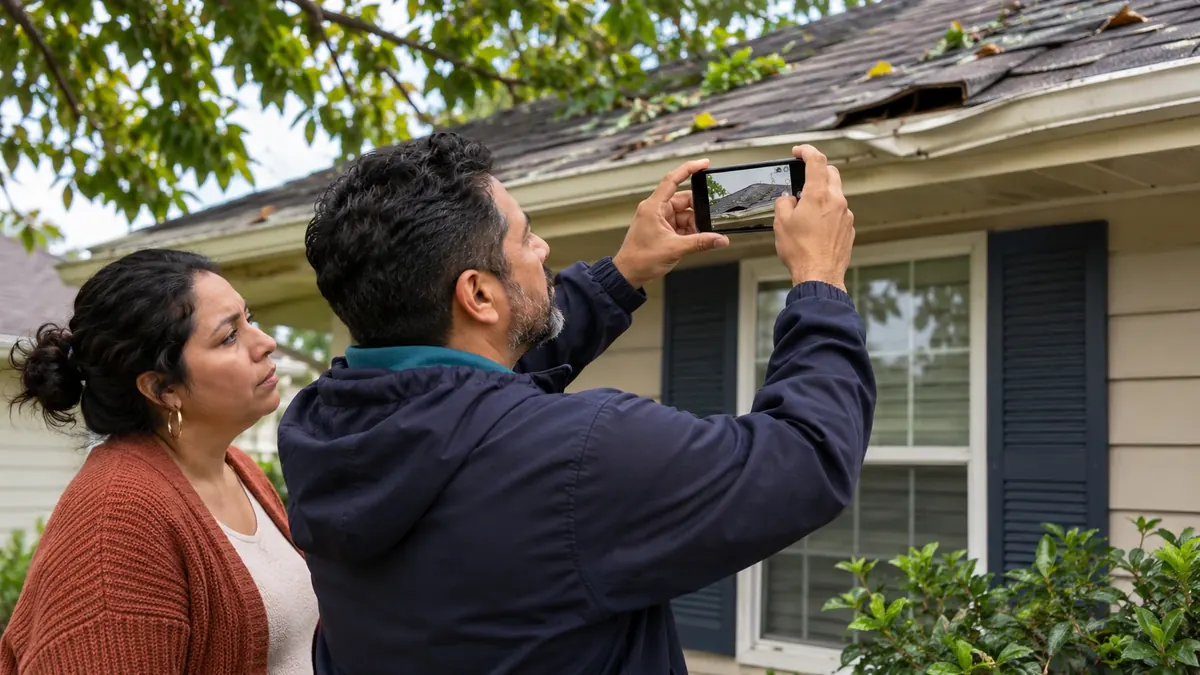
- Document everything. Take photos and video of damage, and list damaged belongings with brand, age and approximate cost.
- Report the claim promptly by phone, app or website. Get a claim number.
- Keep damaged items until the adjuster has seen them, unless they're a health hazard.
- Track extra living expenses if you can't live at home, like hotel and meal costs above normal.
- Meet the adjuster and get a copy of their estimate.
- Get repair estimates from licensed contractors.
- Submit a proof of loss if the insurer asks, by its deadline.
How the payment is figured
Hypothetical example
Worked example: hail damages your roof. Replacing it costs $18,000. The roof is 10 years old, so its actual cash value after depreciation is $11,000. Your deductible is $2,000.
| Payment | Replacement cost policy | Actual cash value policy |
|---|---|---|
| First check (ACV minus deductible) | $9,000 | $9,000 |
| After the roof is replaced (recoverable depreciation) | $7,000 | $0 |
| Total | $16,000 | $9,000 |
Illustrative. Some policies settle roofs at actual cash value even when the rest of the home is replacement cost. See replacement cost vs. actual cash value.
Free, no obligation, about two minutes.
Or call 1-866-739-1313
Checks and your mortgage company
If you have a mortgage, checks for damage to the home are usually made out to both you and your lender. The lender may hold the money and release it in stages as repairs are completed. Ask your loan servicer about its loss draft process early.
If you disagree
- Ask for the adjuster's estimate in writing and compare it line by line with your contractor's.
- Send photos, receipts and contractor estimates that support your amount.
- Many policies have an appraisal clause for disputes about the amount of loss. Each side hires an appraiser, and an umpire settles differences.
- You can hire a licensed public adjuster, who works for you for a percentage of the payment. Some states cap their fees.
- File a complaint with your state insurance department if you believe the claim is being handled unfairly.
Watch out for
- Contractors who knock on your door after a storm and ask you to sign over your claim
- Paying large deposits up front
- Throwing away damaged items before they're documented
Free, no obligation. Call 1-866-739-1313 to speak with a licensed home insurance agent.
Frequently asked questions
Should I file a claim for small damage?
If the repair is close to your deductible, filing may not be worth it, since claims can affect future premiums. Get an estimate first.
How long do I have to file?
Policies require prompt notice, and many have a time limit for lawsuits or proof of loss. Report damage as soon as possible.
Does homeowners insurance pay for a hotel?
If a covered loss makes your home unlivable, loss of use coverage (Coverage D) pays extra living costs above your normal expenses, up to the limit.
Sources
How this guide was made: researched and drafted with AI assistance (Wren AI), checked against the sources listed above, and approved for publication by the Wren AI team. Wren AI is an AI research tool, not a licensed insurance agent.
This guide is general information, not insurance, legal, tax or medical advice. Coverage, rules and prices vary by state, insurer and policy. Confirm details with a licensed agent or the official source before you buy. Read our editorial policy.