Does Pet Insurance Cover Surgery and Emergency Visits?
How pet insurance handles emergency exam fees, diagnostics, hospitalization and surgery, plus exclusions and limits that can affect a big claim.

Updated November 13, 2026 · 5 min read
Key takeaways
- Accident-and-illness plans generally cover emergency care and surgery for covered conditions.
- Emergency exam fees may or may not be included.
- Your deductible, reimbursement rate and annual limit determine what you get back.
- Pre-existing conditions and waiting periods can rule out a claim.

Sample emergency bill
Fictional sample
Fictional example: a dog eats a sock and needs surgery.
| Charge | Amount | Commonly covered? |
|---|---|---|
| Emergency exam | $150 | Varies |
| X-rays and bloodwork | $600 | Yes |
| Surgery and anesthesia | $3,200 | Yes |
| Hospitalization (2 nights) | $1,100 | Yes |
| Medications | $150 | Yes |
| Total | $5,200 |
With a $500 deductible, 80% reimbursement and exam fees excluded: ($5,200 − $150 − $500) × 80% = $3,640 back. Illustrative.
- Check whether exam fees are covered
- Know your annual limit before a big claim
- Keep itemized invoices and records
- See paying the vet directly
How reimbursement works on a big bill
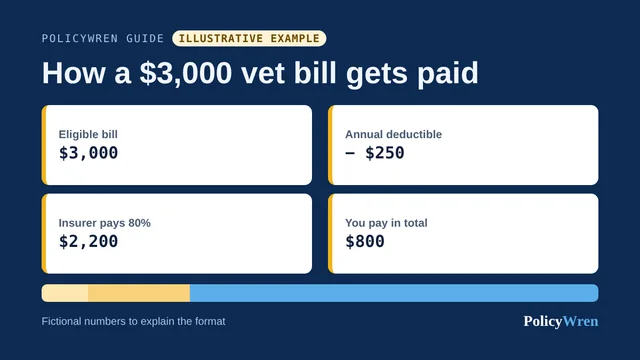
Most pet insurance reimburses you after you pay the vet. On a large emergency bill, the order the insurer applies your deductible, reimbursement rate and annual limit matters:
- The insurer removes anything not covered, like exam fees on some plans, boarding or food.
- Your annual deductible comes off the covered amount, if you haven't met it yet this year.
- The reimbursement rate (often 70% to 90%) is applied to what's left.
- The payment is capped at whatever remains of your annual limit.
Some insurers apply the reimbursement rate before the deductible, which changes the result. Ask which order your policy uses.
Before an emergency happens
- Save the number of the nearest 24-hour emergency clinic and ask whether it accepts direct payment from any insurers.
- Keep an emergency fund or a payment option for the deposit, since many clinics ask for payment up front.
- Ask your insurer whether it offers pre-approval for planned surgeries, like a cruciate ligament repair.
- Keep your pet's records up to date so a claim isn't delayed by a medical record review.
Frequently asked questions
Are specialist and emergency hospitals covered?
Most plans let you use any licensed vet, including specialists.
Is pre-authorization needed?
Not usually for emergencies, but some insurers offer pre-approval for planned surgery.
What if the surgery is for a pre-existing condition?
It's usually excluded.
How this guide was made: researched and drafted with AI assistance (Wren AI), checked against the sources listed above, and approved for publication by the Wren AI team. Wren AI is an AI research tool, not a licensed insurance agent.
This guide is general information, not insurance, legal, tax or medical advice. Coverage, rules and prices vary by state, insurer and policy. Confirm details with a licensed agent or the official source before you buy. Read our editorial policy.